quick reference
- Risk factors include a history of smoking
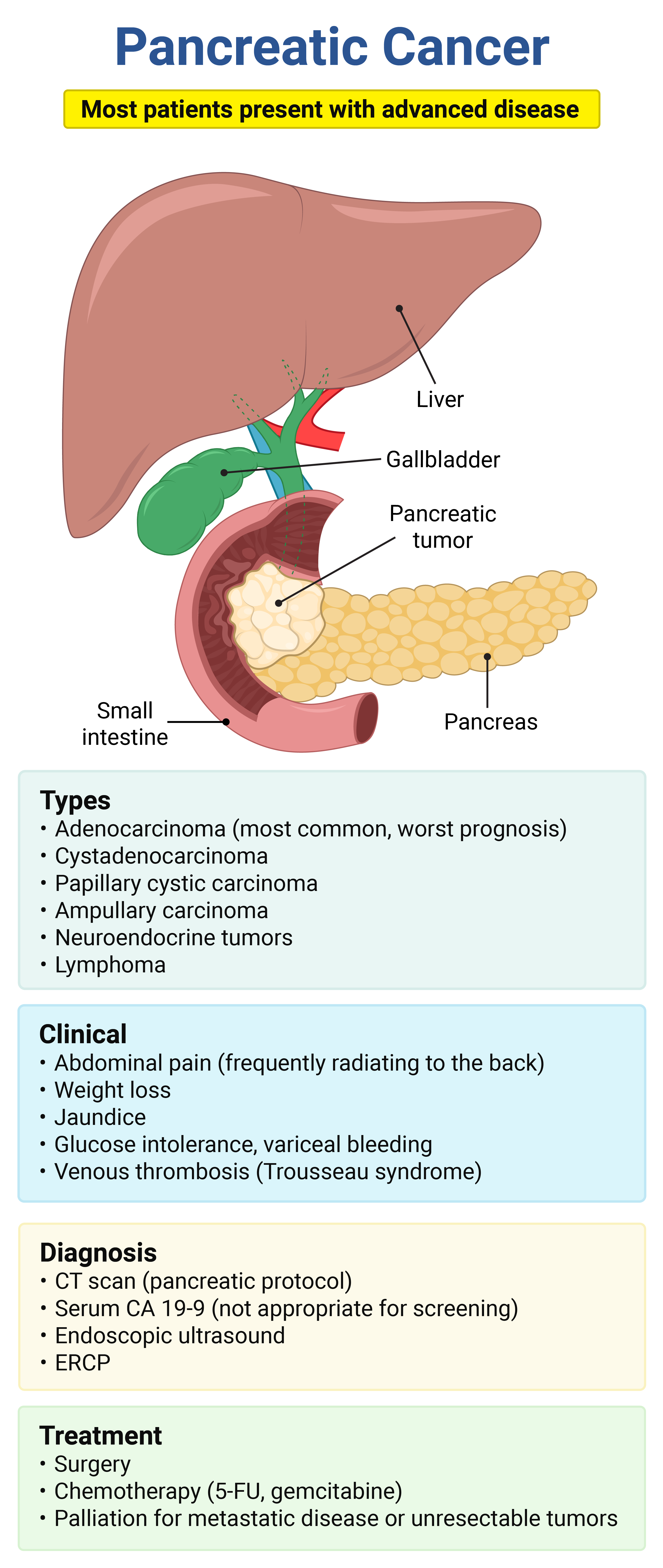
- Most common type is adenocarcinoma
- Sx and findings: abdominal or epigastric pain, jaundice, weight loss, anorexia
- Lab results: CA 19-9 serum marker useful in monitoring
- Dx: U/S, ERCP or MRCP, CT, endoscopic ultrasound
- Management
- Resectable disease: Whipple procedure (pancreaticodudenectomy) + chemotherapy
- Unresectable disease: FOLFIRINOX or gemcitabine-based chemotherapy
- Poor prognosis
pathophysiology
epidemiology / etiology
clinical features
The classic presentation is painless jaundice. Examination may reveal an epigastric mass, a palpable nontender gallbladder (Courvoisier sign), hepatomegaly, and ascites. Trousseau syndrome may also be present. This represents the hypercoagulability that accompanies many cancers and is found on examination as tender migratory thrombophlebitis, which can occur in crops of veins at different times.