quick reference
- Suspect if:
- Tick present or reported (esp. if attached >24hrs)
- Classic Triad: Fever, Rash, Reported Tick Bite
- CLINICAL DIAGNOSIS
- Do not delay treatment for confirmatory assays
pathophysiology
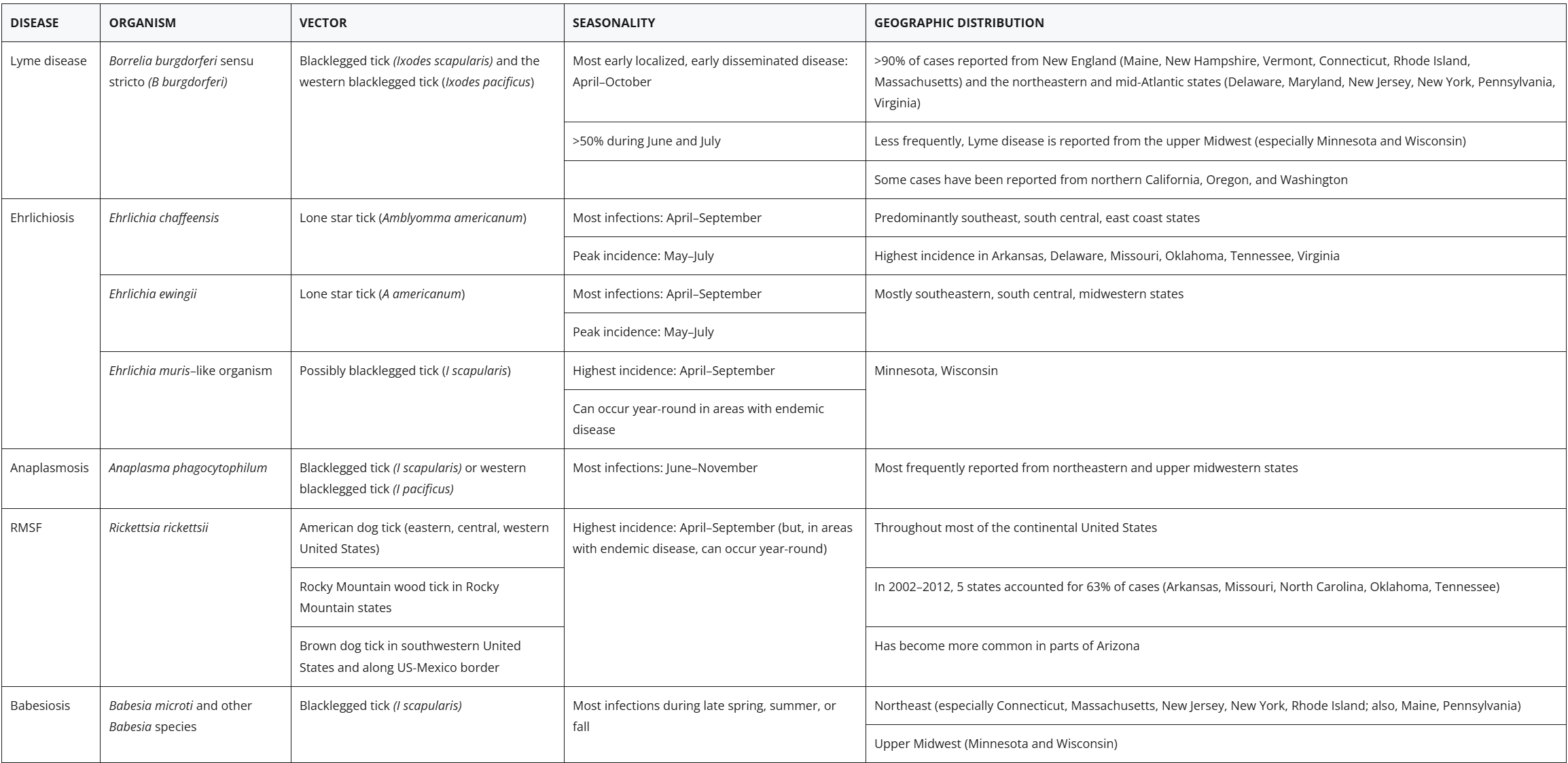
- All are tick vector-mediated bacterial/parasitic/viral infections
epidemiology / etiology
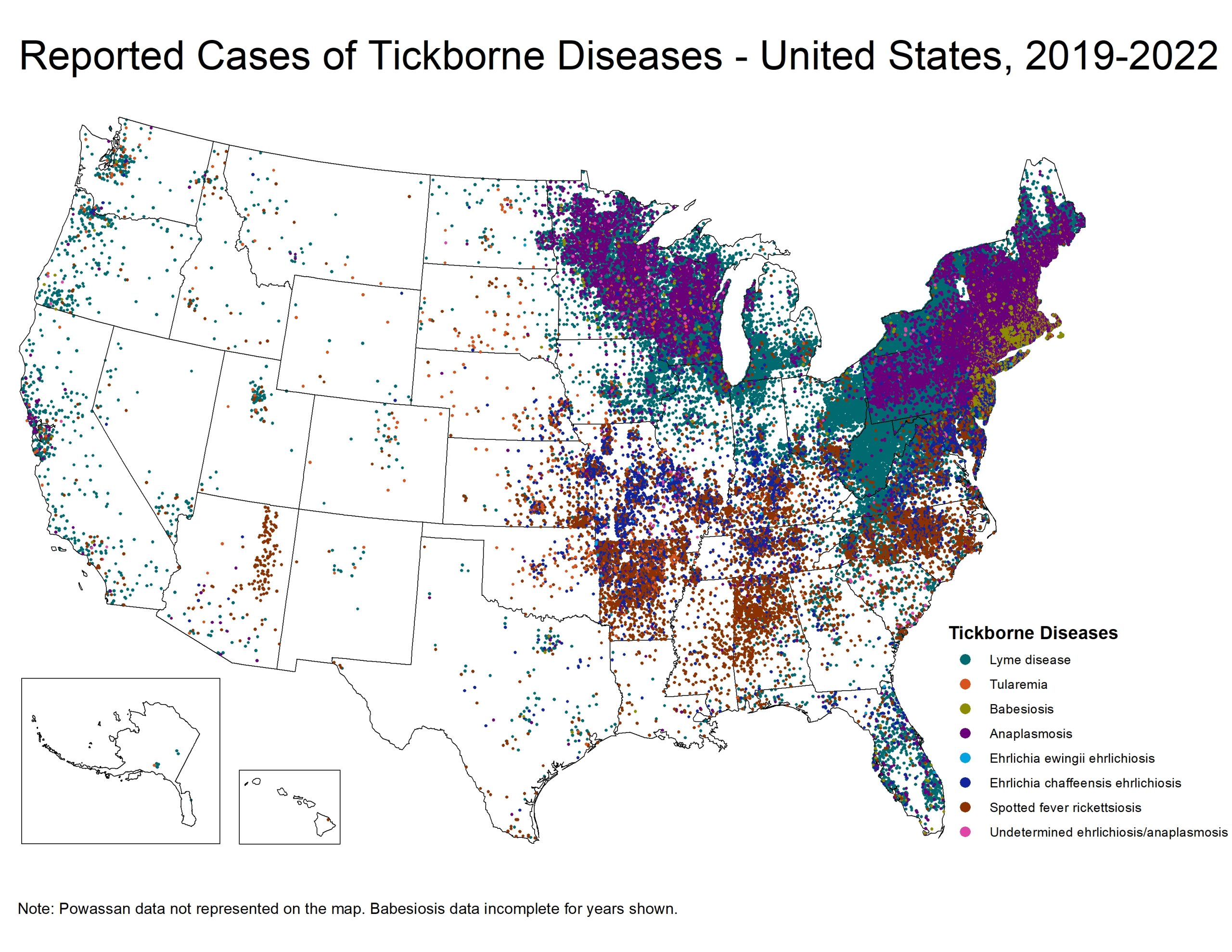
Geographically dependent
- North Carolina MC:
- RMSF (Rickettsia) and Ehrlichiosis
- Surveillance for Vector-borne Illnesses:
- Per North Carolina law (10A NCAC 41A .0101), clinicians are required to report confirmed or suspected cases of the tick-borne illnesses anaplasmosis, babesiosis, ehrlichiosis, rickettsiosis and Lyme disease.
clinical features
- Symptoms of tick-borne diseases are often nonspecific, and may include:
- Fever
- Rash
- Headache
- Malaise
- Nausea
- Myalgia
-Disease-specific findings: - Lyme:
- Erythema migrans (bullseye rash) about 7-14 days after tick detaches
- Babesiosis: None
- RMSF:
- Typically presents acutely with fever, headache, and maculopapular rash (occurring 2-4 days after fever and changing to petechial rash 5-6 days after fever) affecting palms and soles of feet.
- Other symptoms may include malaise, abdominal pain and tenderness, anorexia, lethargy, photophobia, and nausea
- Lab Findings:
- T
diagnosis
- CLINICAL DIAGNOSIS
- Some tickborne illnesses have high mortality if left untreated
- Confirmatory Assays
| Disease | Lab | Notes |
|---|---|---|
| Lyme disease (Borrelia burgdorferi) | Two-tiered serologic testing: 1. ELISA (or EIA) 2. **Weste | For early localized disease (e.g. erythema migrans), diagnosis is clinical. Serology may be negative early. |
| Rocky Mountain Spotted Fever (Rickettsia rickettsii) | Indirect Immunofluorescence Assay (IFA) for IgG antibody to R. rickettsii | Best if done on paired acute and convalescent samples (≥4-fold rise). Antibodies usually detectable after day 7. |
| Ehrlichiosis (Ehrlichia chaffeensis) | PCR of whole blood | Morulae may be seen in monocytes (E. chaffeensis). IFA serology also confirmatory with 4-fold rise in titer. |
| Anaplasmosis (Anaplasma phagocytophilum) | PCR of whole blood | Blood smear may show morulae in neutrophils, but low sensitivity. Serology (IFA) is confirmatory retrospectively. |
| Babesiosis (Babesia microti) | Peripheral blood smear OR PCR | Smear shows intraerythrocytic parasites (“Maltese cross” pattern); PCR is more sensitive, especially in low parasitemia. |
treatment
- When in doubt, Tick = Doxy
- Exception:
- Babesiosis= atovaquone plus azithromycin