Prenatal
general
Visit Schedule (Avg. risk)
- Initial visit at 6-8 weeks
- Every 4 weeks until 28 weeks
- Every 2 weeks until 36 weeks
- Weekly until delivery
Newer ACOG guidance generally allows for less frequent visits / telehealth
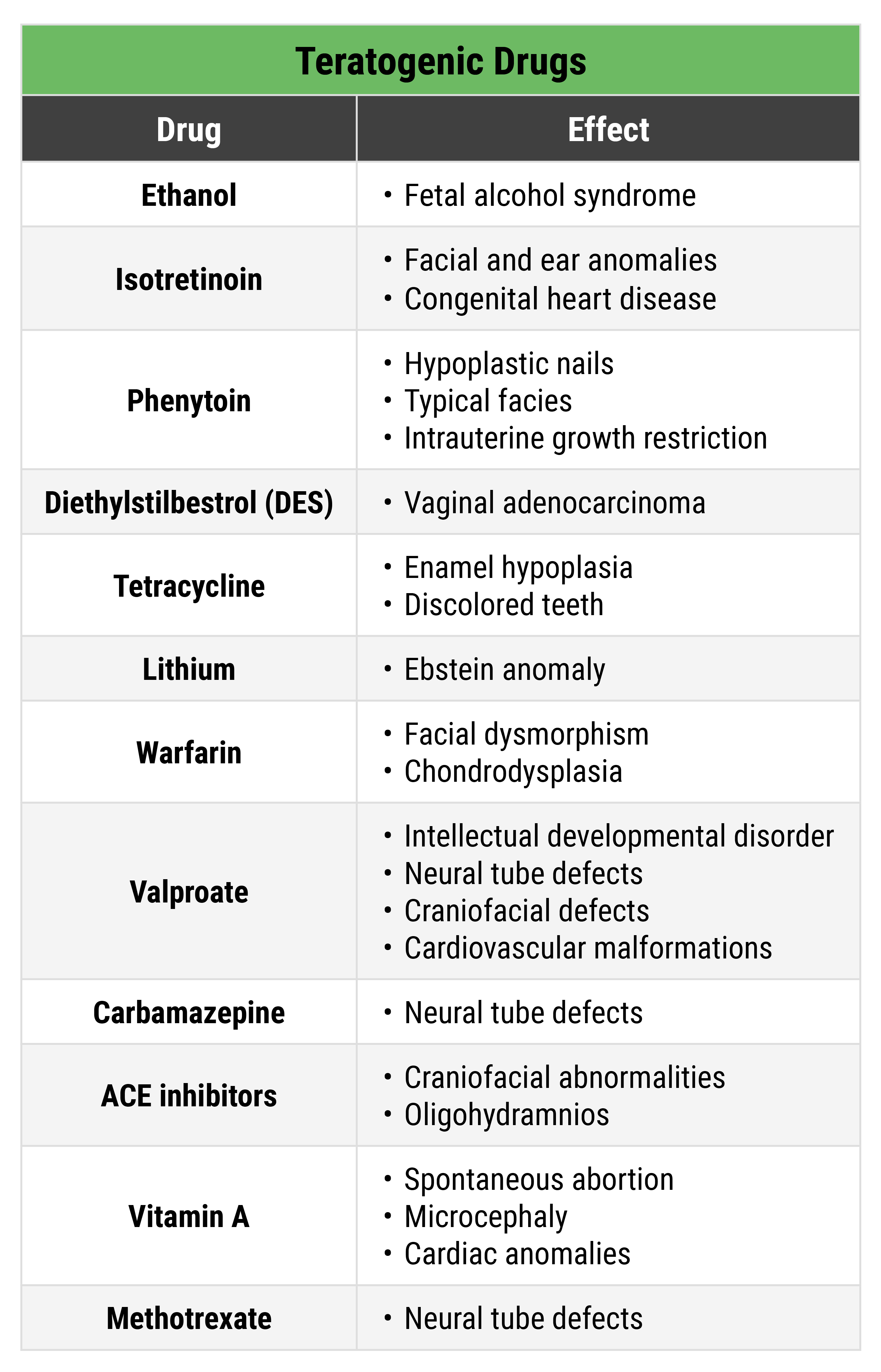
medications in pregnancy
Go-to Antihypertensives
Procardia
Labetolol
Hydralazine
labs and imaging
-
Initial prenatal (CBC, CMP, Type and screen, RH, STI (GC/CT, RPR, HIV, Hep B/C), Titers (Rubella / Varicella), UA w/ culture, Pap (if due), TSH/Glucose/A1C (if risk factors), hemoglobin electrophoresis
-
Viability ultrasound: IUP and establish EDD
-
1st Trimester: Serum hcg, PAPP-A, cell free DNA (after 10 weeks)
-
18-22 Weeks: Quad Screen (AFP, HCG, estriol, inhibin A) or Mat21
- Anatomy Ultrasound
-
26-28 Weeks: RPR, HIV, OGTT, CBC, Rhogam (if -), TDAP
- Tubal ligation consent (medicaid)
-
36 Weeks: GC/CT, GBS, Repeat HIV/HepB/C, CBC
3rd Trimester (if obese / gestational diabetes)
- Fetal growth ultrasounds every 3-4 weeks
Post Partum
2 week (LTCS) / 6 week (LTCS/SVD) Visit:
Assess:
Anemia
Lactation/feeding
Healing of tears/incisions
- C-Section
- 2 week and 6 week post partum visits
- Vaginal
- 6 week post partum visit
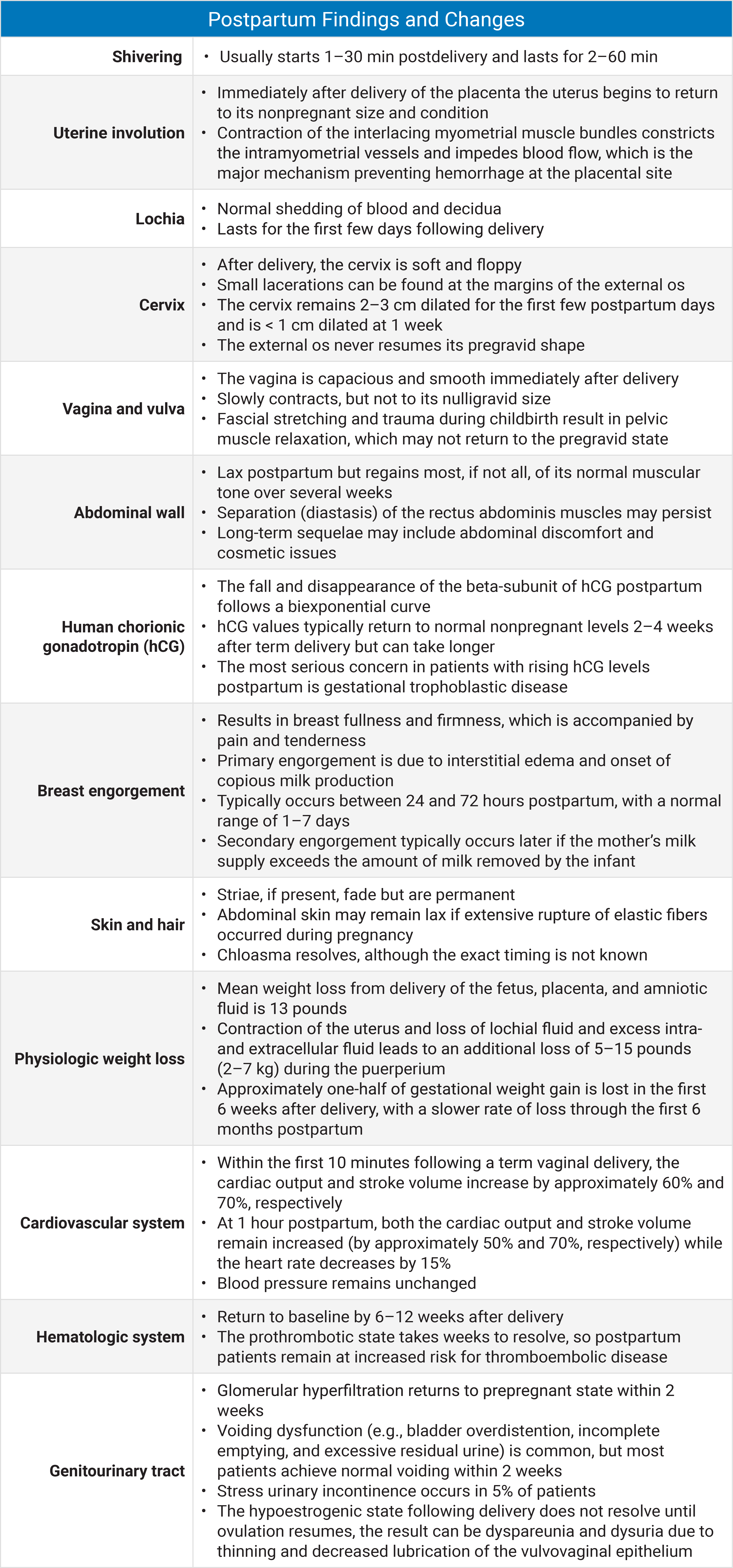
The puerperium is defined as the 6- to 8-week period following delivery during which the body returns to a nonpregnant state. Involution of the uterus begins immediately after delivery, with the fundus palpable midway between the pubic symphysis and the umbilicus. The uterus returns to the pelvis after 2 weeks and achieves a normal, nonpregnant size by 6 weeks. Postpartum patients may report menses-like bleeding followed by other forms of vaginal discharge, termed lochia.
After the placenta separates from the uterine wall, the basal portion of the decidua remains. The superficial layer is shed while the deeper layer regenerates the endometrium. This initial shedding results in red or red-brown discharge (lochia rubra) that lasts for a few days following delivery. Lochia rubra is followed by lochia serosa, which has a pinkish-brown coloring that lasts for 2 to 3 weeks. The final yellowish-white discharge, termed lochia alba, is composed of serous exudate, erythrocytes, leukocytes, decidua, epithelial cells, and bacteria. Lochia may continue for up to 8 weeks postpartum.
Malodorous lochia is most commonly caused by a retained gauze sponge left in situ after episiotomy or laceration repair and resolves following the removal of this foreign body. Additionally, malodorous or abnormal lochia in the presence of fever and a soft, tender uterus may indicate endometritis, and culture of this abnormal discharge can be useful in guiding antibiotic treatment, as long as the culture is not contaminated by cervical or vaginal flora.
Lochia alba is yellowish-white and follows lochia serosa, around 2 to 3 weeks postpartum. This discharge is an exudative discharge that can persist up to 8 weeks postpartum.
Lochia rubra is the initial phase of postpartum vaginal discharge and typically subsides after a few days. It is mostly red or red-brown due to the presence of active or recent bleeding.
pre-eclampsia
Hypertension (>140/>90) + another feature
- Most Common: proteinuria (>1+ qual or >0.3 Protein/Cr ratio)
- New onset headache not relieved by meds
- Vision changes (scotomata / photopsia)
- Shortness of breath (2/2 pulmonary edema, apart from normal)
- Thrombocytopenia (<100)
- RUQ pain (2xULN ALT/AST)
Also check for reflexes, clonus, edema
Severe Features
- BP >160 / >110
- Thrombocytopenia
- HELLP
- Seizure (eclampsia!)
workup
- CBC
- CMP or BMP + LFT
- LDH
- UA
- Spot urine Protein / Cr
Treatment
- IV Mg (4g bolus then 1g per hour for 24hrs)
- Lower BP <160/<110
- BP Meds safe in pregnancy: Nifedipine, Hydralazine, Labetolol