Radial Head Subluxation
Presentation
Most common in children from 1 to 4 years of age
- average age is 28 months
- rare after 5 years of age
- slightly more common in females
Patients demonstrate limited to no movement of the affected arm -the actual position of the arm may be variable:
- Full extension at the elbow
- slightly flexed elbow
- elbow flexed to 90 degrees
The extremity is held close to the body with the forearm most commonly pronated.
Physical Exam
- Vitals
- Motor / Neuro / Vascular exams
- Tenderness may be produced with any manipulation and palpation over the radial head.
- Any attempt to supinate the forearm will produce pain, fussiness, and anxiety as a result of the entrapped annular ligament.
- Soft tissue swelling in any area of the extremity exam is uncommon with Radial Head Subluxation and should increase a suspicion of fracture.
- Though rare, consider NAT
Anatomy / Patho
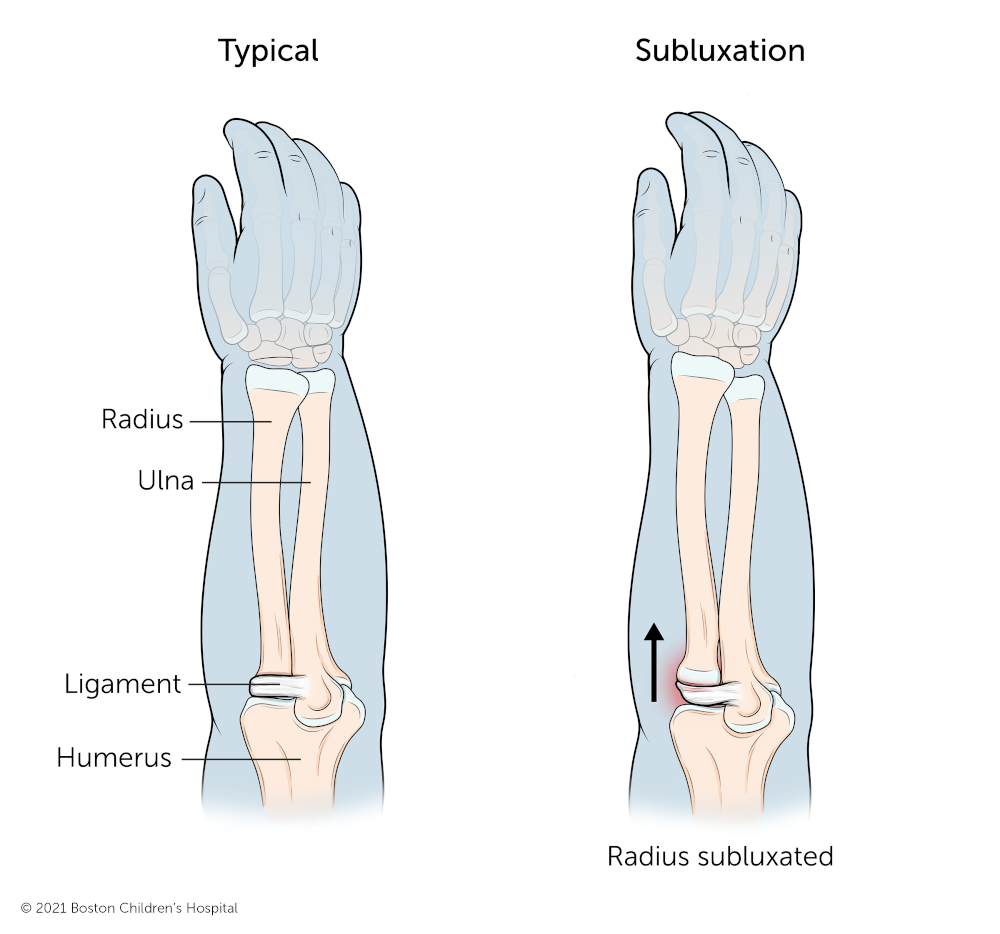
- subluxation of the annular ligament due to a sudden longitudinal traction applied to the hand.
Diagnosis
CLINICAL
Radiographs are not indicated when history and exam are highly suggestive of Nursemaid’s Elbow.
Imaging should be considered if any swelling is noted to the extremity, if there is concern for non-accidental trauma, or if a reduction is unsuccessful, as these all may indicate the presence of a fracture.
Treatment
Reduction
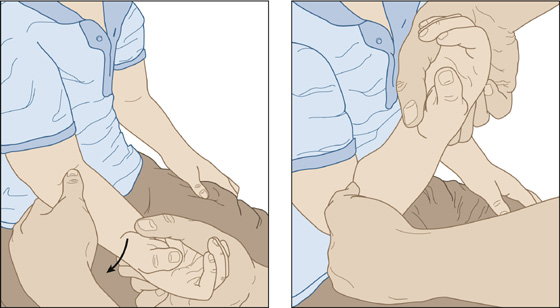
- Hyperpronation
- With the child ideally seated in the parents lap and facing the examiner, the radial head is located and pressure is applied with the thumb or index finger.
- With pressure applied to the radial head in a medial direction, the examiner’s opposite hand grasps the distal forearm and applies hyperpronation.
- A palpable and/or audible click may be appreciated at the time of successful reduction.
- A variation to hyperpronation includes the additional application of flexion at the time of maximal hyperpronation.
- At the end of the maneuver, the elbow is extended and released.
- Supination/Flexion
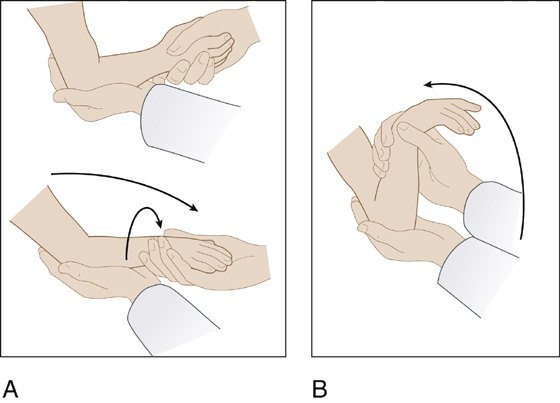
- Similar to hyperpronation, the supination/flexion technique includes placing the child in a caregiver’s lap facing the examiner.
- The radial head is located and pressure is applied with the thumb or index finger.
- With the examiner’s opposite hand, axial traction with supination and flexion of the elbow past 90 degrees is applied in one smooth motion.
- A palpable and/or audible click may be appreciated at the time of successful reduction.