Tube Feeding
general
Tube food concentrations:
- between 1.0 and 2.0 kCal / mL
More concentrated:- less volume needed for daily kCal needs
- more free water needed
Less concentrated: - more volume needed for daily kCal needs
- less free water needed
tube food math
Daily Caloric goal= Weight (kg) x 25
- min protein goal = 1g/kg
- supplement: prostat
Qty of tube food = Daily caloric goal /tube food concentration
- i.e. 2500kCal / 1.5 =1,667 mL of tube food
water math
Tube feeds are 75% water
-
Daily water requirement = 1mL per Kcal of tube feed
-
Tube food volume x 0.75 = tube food water
-
Daily water requirement - tube food water = free water need
tube mechanics
feeding rate
Gastric feeds:
- i.e. NG tube, PEG, etc.
- Stomach can accommodate larger boluses of food
- “Can” sized amounts divide “meals”
Small bowel feeds:
- i.e. Dobhoff, DJ tube, etc.
- duodenum/jejunum cannot accommodate large boluses
- MUST PUT TUBE FOOD ON PUMP
- rate = daily food (mL) / hours of feeding
Tube Types
nasogastric tubes (NGT)
Common uses:
- gastric decompression (SBO, ileus, gastroparesis)
- NPO patients
- placed on LIWS (low intermittent wall suction)
Daily gastric juice production = 1-1.5L / day
- NGT output dictates when it can be pulled
- used to measure how much content is transiting the GI tract
NGT Daily Output
- <500mL = good to pull
- 500-1000mL = iffy
- more than 1L = keep it in
Another method: 4hr clamp trial - is pt tolerates (no nausea, vomit, burp, belch, hiccup, etc) then probably ok to pull
- risks:
gastrojejunal tubes (GJT)
- 2 lumens: feeds stomach and jejunum
- Placed by GI, IR, or intraoperative
- G tube
- can vent gastric contents while still feeding patient through J
- can perform clamping trials
- J tube
- can feed distal to reconstruction edema
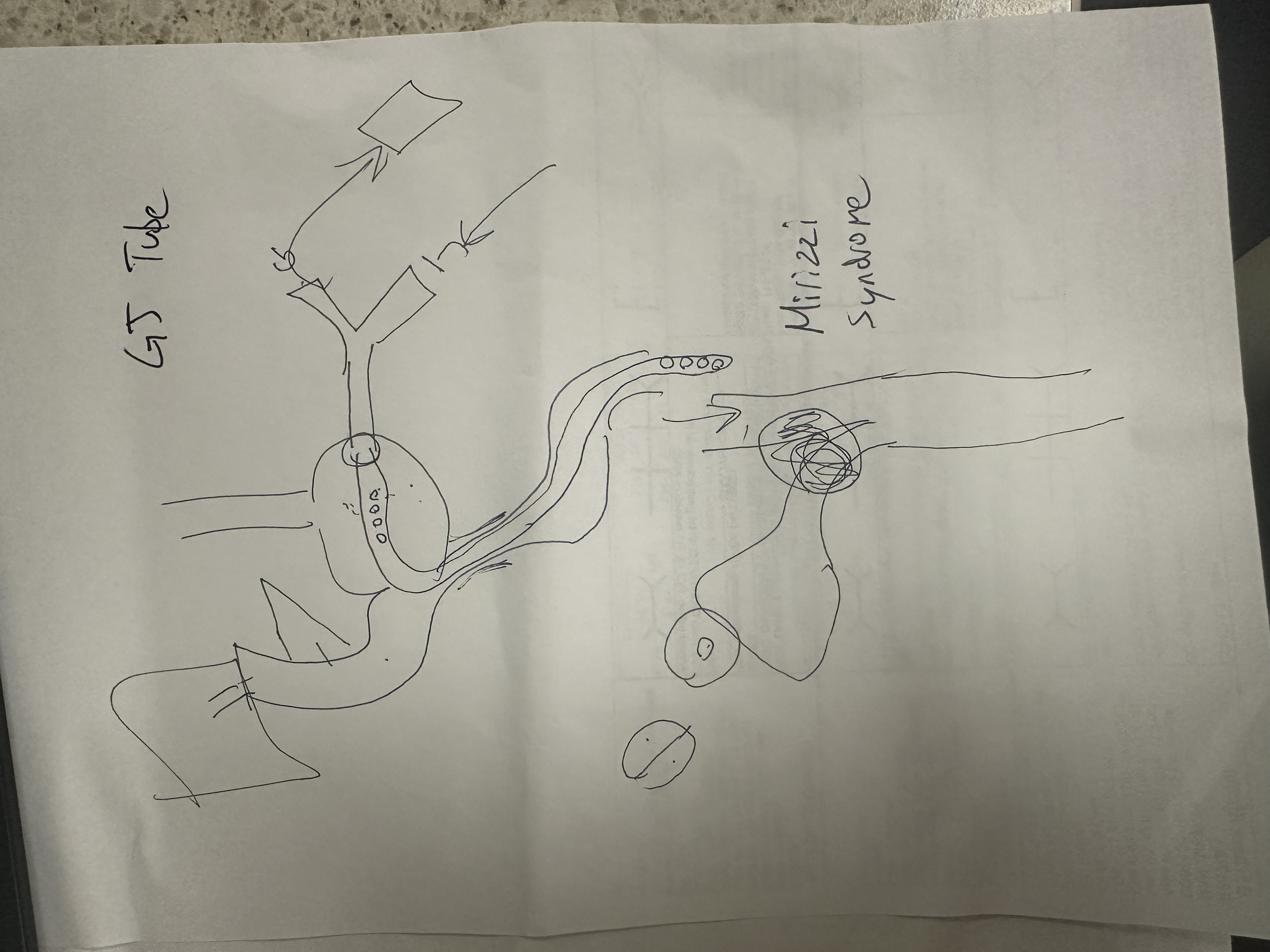
- can feed distal to reconstruction edema