quick reference
- 2–8 weeks of age, boys > girls
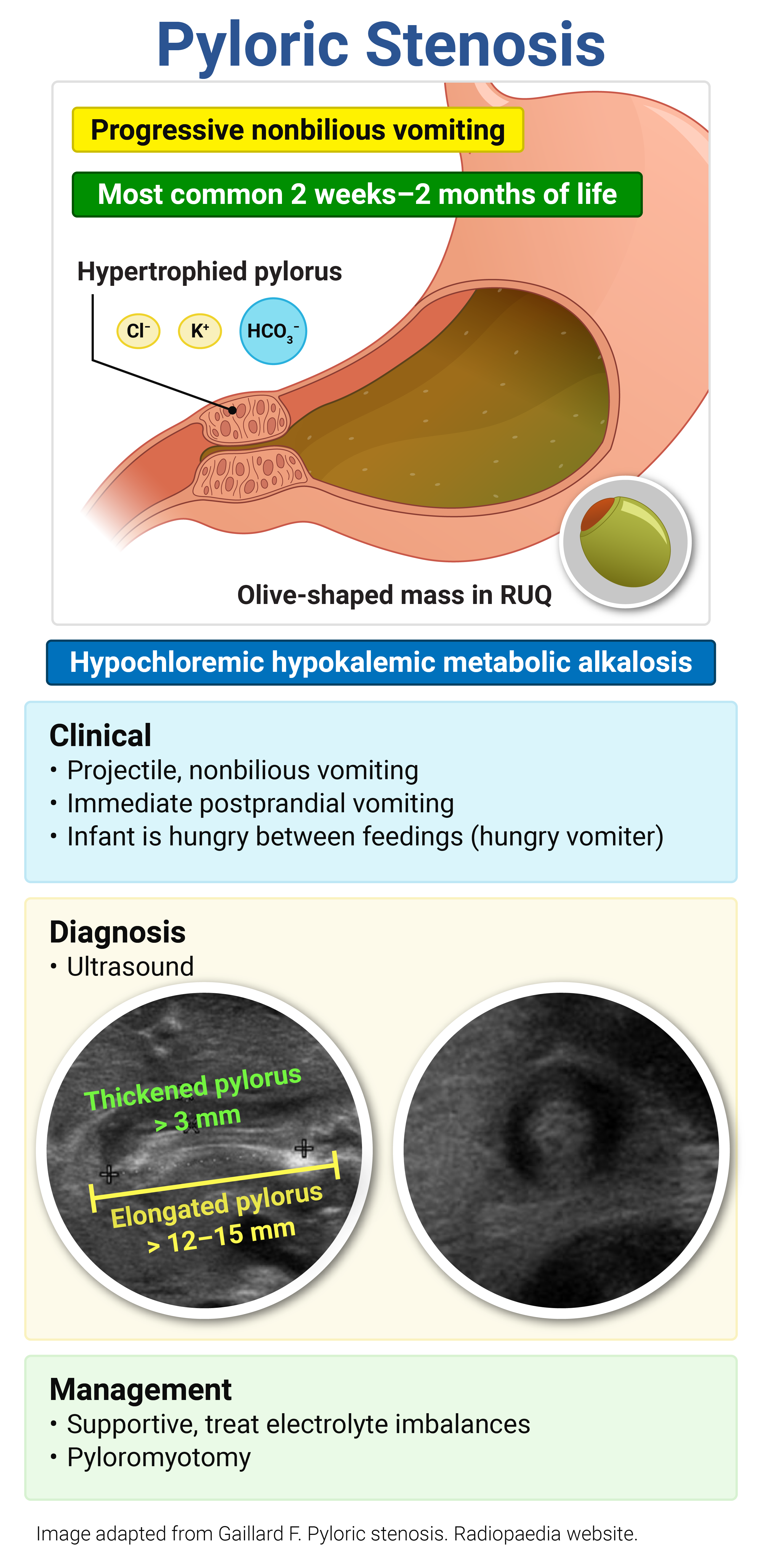
- Sx: nonbilious projectile vomiting after feeding, early satiety
- PE: dehydration, RUQ olive-like mass
- Lab results: hypochloremic hypokalemic metabolic alkalosis
- Dx: ultrasound or UGI series (string sign)
- Tx: fluid and electrolyte replacement, pyloromyotomy
pathophysiology
epidemiology / etiology
This condition typically presents between 3 and 5 weeks of age and is more common in firstborn male infants, premature infants, and those exposed to macrolide antibiotics like erythromycin in the first 2 weeks of life.
clinical features
IHPS is characterized by the infant being a hungry vomiter
- episodes of forceful, nonbilious vomiting followed by an immediate desire to feed again.
On physical exam, a palpable olive mass
- represents the hypertrophied pylorus, may be felt in the right upper quadrant of the abdomen.
Persistent vomiting seen in pyloric stenosis results in significant electrolyte disturbances, most notably hypochloremic metabolic alkalosis
- due to the loss of stomach acid. Over time, the resulting hypovolemia stimulates aldosterone production, which further exacerbates electrolyte imbalances and leads to hypokalemia as potassium is lost in exchange for sodium retention in the kidneys.