Quick Reference
Pearls:
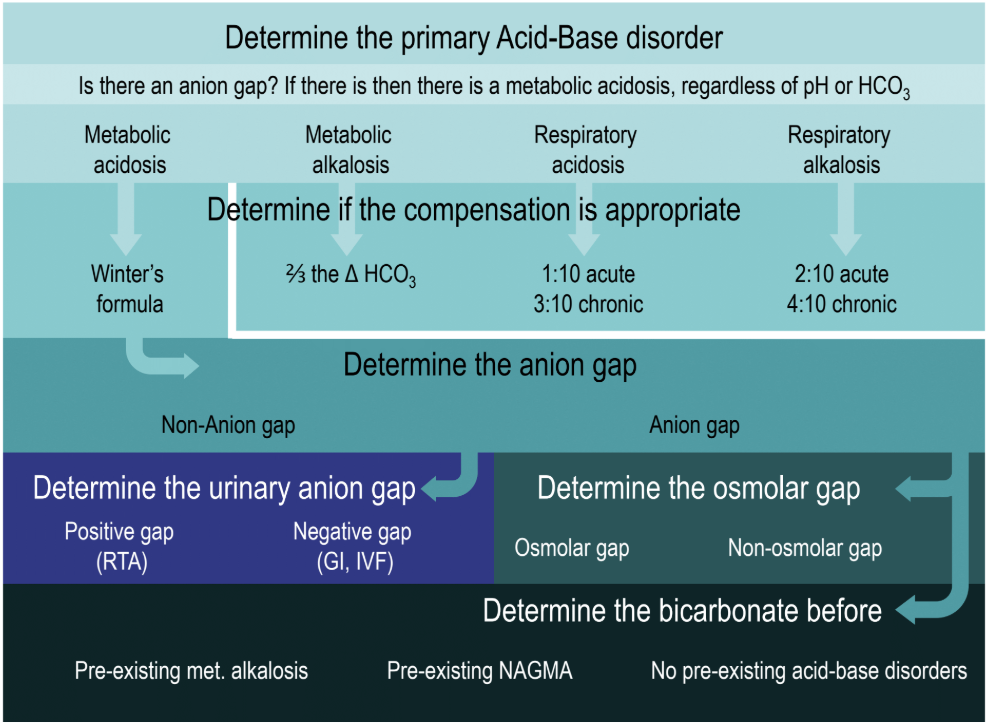
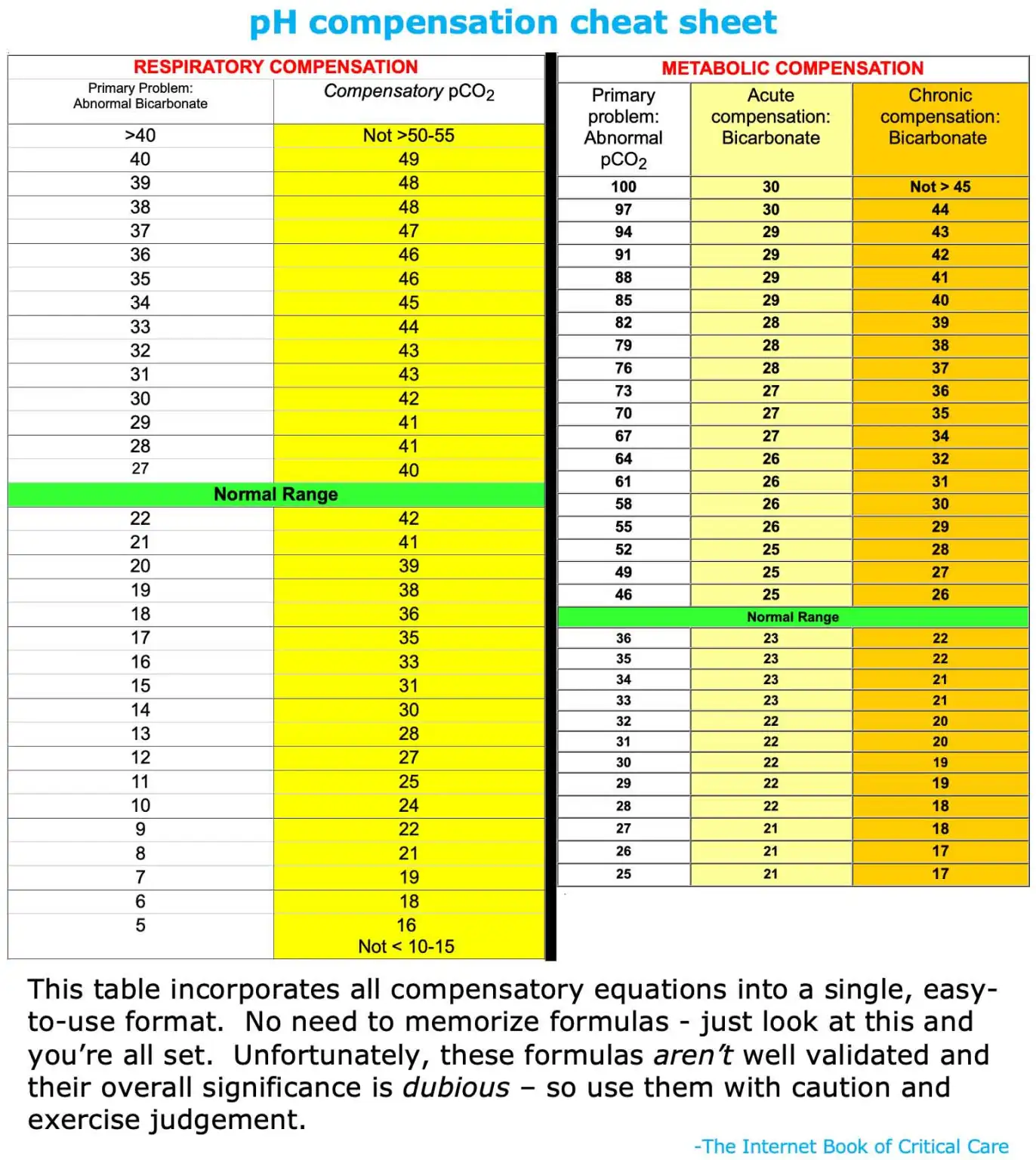
Learn the compensation equations: the body will not over compensate - it is an additional underlying process
Clinical Evaluation of Metabolic Acidosis:
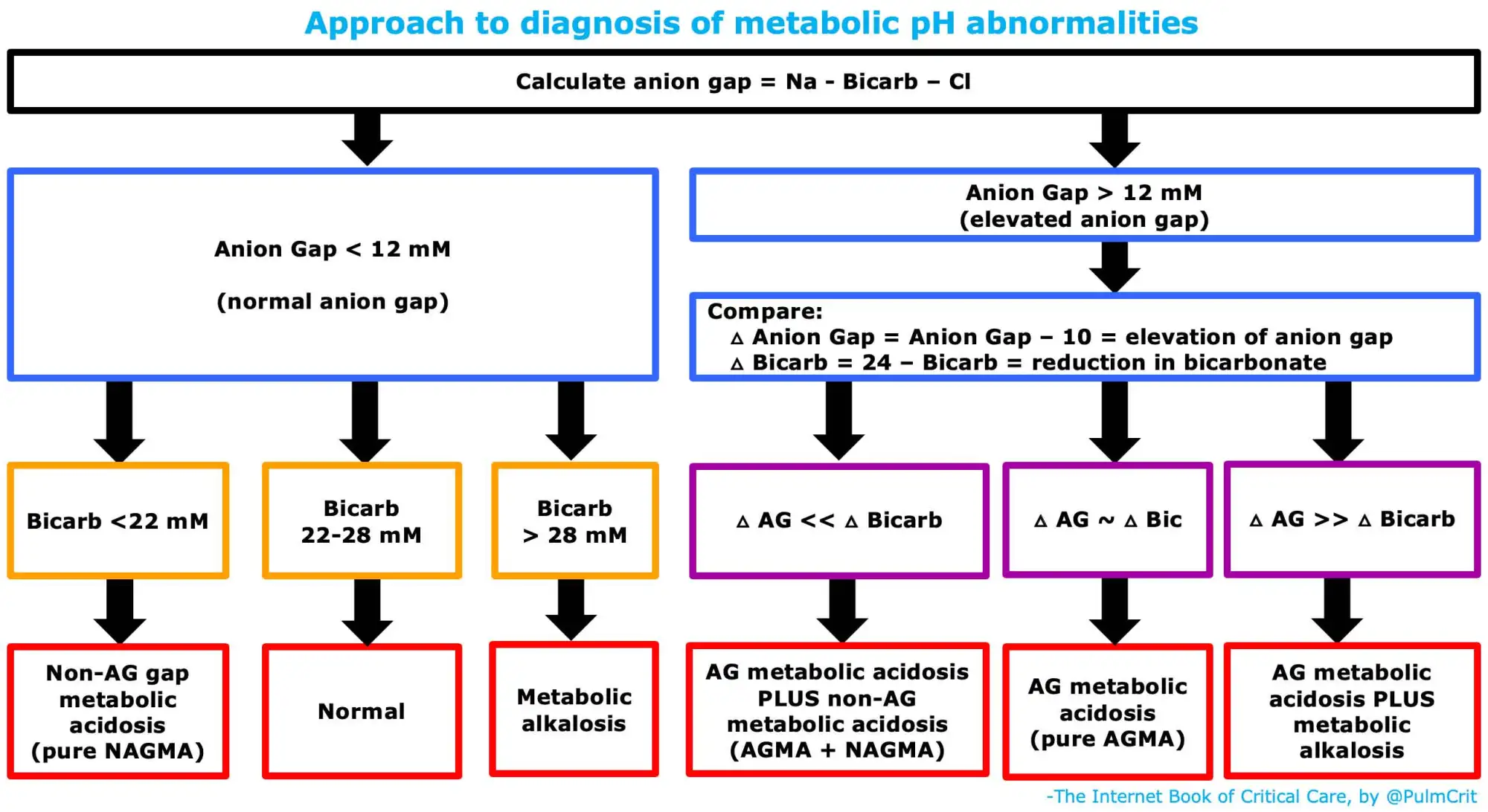
- Determine Anion Gap
- Determine Winter’s (underlying additional respiratory derangement)
- Determine Delta-Delta (ΔAG / ΔBicarb)
- (Anion Gap -12) / (Bicarb - 24)
- ΔAG ~= ΔBicarb
- If Δ Anion gap is roughly equal to Δ Bicarbonate, no other process is present. This is what we would expect for an isolated, pure anion gap metabolic acidosis.
- ΔAG >> ΔBicarb
- If Δ Anion gap is much higher than the Δ Bicarbonate, then a second process is present which is increasing the bicarbonate level. This reveals a combination of an anion gap metabolic acidosis plus a metabolic alkalosis.
- ΔAG << ΔBicarb
- If the Δ Anion gap is much lower than the Δ Bicarbonate, then this reveals a second process which is decreasing the bicarbonate. This indicates a combined anion gap metabolic acidosis plus a non-anion-gap metabolic acidosis.
NAGMA -> consider ordering urine electrolytes (Na, K, Cl)
- Urine Anion Gap = (UNa + UK) - UCl
- Positive gap (>1): RTA
- Negative gap (<1): GI loss, IV Fluid
Bootleg Winters’ Formula:
pCO2 should = last 2 digits of pH if respiratory compensation is adequate
- i.e. if pH is 7.15, pCO2 should be ~15
- if pCO2 is higher, suspect additional respiratory acidosis
- if pCO2 is lower, suspect additional respiratory alkalosis
Simplified Winters’ Formula:
Predicted PaCO2 = HCO3- + 15.
- This apparently works for PaCO2 concentrations between 10-40.
Real Winters’ Formula
1.5 x HCO3- + 8 (+/- 2)
Determining Prior Bicarb
- HCO3before = HCO3now + (AGnow - AGnormal)
- Can help identify underlying metabolic derangements prior to current acute disorder
Patho / Physiology
Systems
Bicarbonate Buffer System (Le Chatlier’s Principle)
CO2 + H2O = H2CO3 = H+ + HCO3-
- e.g. metabolic acidosis (more H+) -> left shift -> more CO2 -> compensatory hyperventilation
- e.g. metabolic alkalosis (more HCO3-) -> right shift -> less CO2 -> compensatory hypoventilation and urine bicarb excretion
pH = balance of CO2, H+, and HCO3- (simplified)
- Primary mediator of CO2 = lungs (ventilation)
- Primary mediator of HCO3- = kidneys (urine)
- Primary mediator of H+ = GI (stomach acid) and kidneys (urine)
Acids and Bases in Blood
Simply:
- When a Brønsted-Lowry acid (e.g., lactic acid, ketoacids) is added to plasma, it dissociates into a proton (H⁺) and its conjugate base (an anion, such as lactate⁻ or β-hydroxybutyrate⁻). The H⁺ is buffered primarily by bicarbonate (HCO₃⁻), which is consumed in the process, resulting in a decrease in serum bicarbonate concentration. The conjugate base (the anion) remains in the serum, increasing the pool of unmeasured anions and thus raising the calculated anion gap ([Na⁺] – ([Cl⁻] + [HCO₃⁻]).
- The decrease in serum bicarbonate is directly matched by the accumulation of unmeasured anions, maintaining electroneutrality in the blood. This mechanism underlies the diagnostic and physiological significance of the anion gap in metabolic acidosis
Compensation
- When underlying process (respiratory or metabolic) drives pH outside of normal range, the alternate system “compensates”
- e.g. metabolic acidosis = compensatory respiratory alkalosis
Lung Compensatory Mechanisms
- e.g. metabolic acidosis = compensatory respiratory alkalosis
- Hyperventilation -> expel CO2 -> raise pH (compensatory respiratory alkalosis)
- Hypoventilation -> retain CO2 -> lower pH (compensatory respiratory acidosis)
Kidney Compensatory Mechanisms - Respiratory acidosis -> retain HCO3 -> raise pH (compensatory metabolic alkalosis)
- Respiratory Alkalosis -> excrete HCO3 -> lower pH (compensatory metabolic acidosis)
A quick note about anion gap and acidosis:
- The mean anion gap is 8-12 mEq/L . The standard deviation of an anion gap is ±2 mEq/L. An anion gap of 20 is ~4-5 SD above the mean - i.e. 99.999% chance they have an AGMA. No need to wait for blood gases to diagnose.
Primary Metabolic Acid-Base Derangements
Anion Balance: AGMA vs NAGMA
AGMA
Anion gap metabolic acidosis occurs when there is an accumulation of acids in the blood, leading to a decrease in pH via an increase in H+ and an increase in unmeasured serum anions (A-).
- Weak Acid: HA <-> H+ and A-
Simple DDx: KULTS
Ketones
Uremia
Lactate
Toxic ingestion (toxic alcohols, APAP, etc.)
Salicylates
AGMA -> measure serum Osm -> calculate Osm gap
- You can easily screen for any alcohol intoxication with an osmolar gap.
- Common Osmolar Gap AGMA culprits:
- Methanol: present in windshield wiper fluid, paint, paint thinners, and wood stains, as well as other household and industrial agents
- Ethylene glycol: antifreeze, can also be found in several other substances, such as engine coolants and industrial solvents
- Propylene glycol: can be seen in patients receiving parenteral medications for which propylene glycol is used as a diluent, including diazepam, lorazepam, phenobarbital, phenytoin, and nitroglycerin
- Diethylene glycol: another industrial solvent
- Isopropyl alcohol: hand sanitizer and rubbing alcohol
- Ethanol: good ol fashioned alcohol
Source: Diagnostics - Toxic Alcohols — Taming the SRU
Full DDx: GOLDMARK and/or MUDPILES
GOLDMARK
- Glycols (Ethanol and ethylene glycol)
- cause anion gap by consuming Kreb’s cycle intermediaries, leading to buildup of organic acids (similar to methanol). You can easily screen for any alcohol intoxication with an osmolar gap.
- Oxoproline (Paracetamol/Acetaminophen/Tylenol)
- depletion of glutathione stores results in a buildup of pyroglutamic acid. Phenformin uncouples mitochondria, leading to lactic acidosis. Paraldehyde likely disrupts glycolysis or the Krebs cycle, leading to ketosis.
- L-Lactic acidosis
- Somewhat self-explanatory. Simply:
- Type A (hypoperfusion)
- Type B (catecholamine and medication driven)
- Not simply:
- Hyperlactatemia
- ~0.5-2 mM is normal.
- 2-4 mM is mild/moderately elevated.
- over 4 mM is unequivocally elevated. This is worrisome for an occult shock state or serious illness
- Somewhat self-explanatory. Simply:
- D-Lactate
- D-lactic acidosis is very rare, but D-lactic acidosis may be more common than generally believed and should be looked for in a case of metabolic acidosis in which the cause of acidosis is not apparent.
- D-lactic acidosis arises from abnormal bacterial fermentation of carbohydrates in the gastrointestinal tract
- The entity should be considered as a diagnosis in a patient who presents with metabolic acidosis accompanied by high anion gap, normal lactate level, negative ketones, history of short bowel syndrome or malabsorption, and characteristic neurologic manifestations (ataxia, slurred speech, confusion)
- Methanol
- consumes Kreb’s cycle enzymes and results in a buildup of formic acid.
- Aspirin (Salicylates)
- disrupt the Kreb’s cycle and decouple mitochondria, leading to accumulation of organic acid intermediaries and lactic acid. Salicylates interestingly also directly stimulate respiratory centers in the brain, causing hyperventilation. (typically AGMA + resp. alkalosis)
- Renal Failure (Uremia)
- When someone’s glomerular filtration rate falls below 15 mL/min, non-organic acids that are filtered by the kidney (which we usually don’t measure) are retained, such as phosphites, sulfites, and nitrites. These are probably involved in the pathophysiology behind uremic encephalitis and pericarditis. Urea gets a bad rap.
- Ketoacidosis (DKA, etc.)
- lactic acid and ketones (ketones are acids, btw).
MUDPILES (covered above except iron / isoniazid)
- Iron
- multifactorial, including iron’s physiochemical effects; but fluid loss, cardiogenic shock, and hepatic failure leading to lactic acidosis contribute to the acidosis.
- Isoniazid
- inhibits the conversation of lactate to pyruvate by vitamin B6 depletion. Inborn errors of metabolism are unique.
Osmolar Gap:
- Methanol is metabolized to formic acid and presents with altered mental status (AMS), blurry vision, dilated pupils, and papilledema.
- Ethylene glycol forms oxalic acid and can cause AMS, cranial nerve palsies, flank pain, hematuria, hypocalcemia with tetany, and calcium oxalate crystals (envelope shaped crystals) leading to acute kidney injury (AKI).
- Propylene glycol is converted to lactic acid and may cause AKI and liver injury.
- Diethylene glycol is metabolized to diglycolic acid and presents with AKI, nausea/vomiting, hepatitis, pancreatitis, neuropathy, AMS, and elevated lactate.
- Isopropyl alcohol is converted to acetone and typically causes AMS, fruity breath, pancreatitis, and elevated lactate with a normal or mildly elevated anion gap.
- Ethanol is metabolized to acetaldehyde and may result in ketoacidosis, lactic acidosis, and metabolic alkalosis due to vomiting.
NAGMA
Non-anion gap metabolic acidosis is caused by the GI or Renal loss of HCO3-.
- (removal of base rather than the addition of acid)
- Results in equivalent accumulation of serum chloride
DDx: HARD
- Hyperchloremia
- Wait, how many Normal Saline boluses did this patient get?! By increasing urinary chloride, you force urinary excretion of bicarbonate. The beta-intercalated cell in kidney exchanges bicarbonate for chloride.
- Acetazolamide
- Inhibits bicarbonate reabsorption in the proximal tubule of the kidney, causing urinary excretion of bicarbonate.
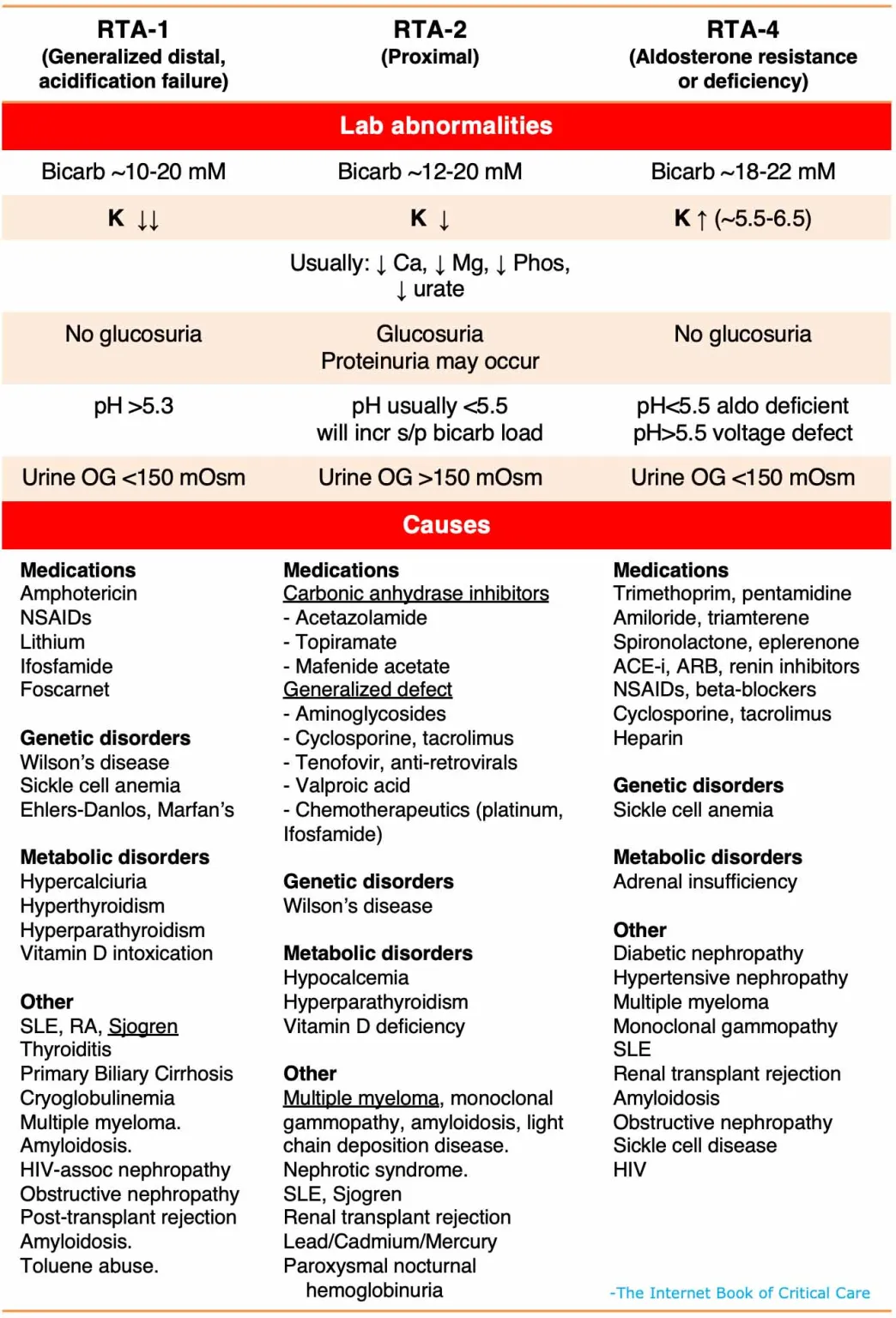
- Renal Tubular Acidosis
- RTA just means that your kidney is excreting excess bicarbonate when it shouldn’t be (i.e. the renal tubules are not retaining bicarb, and are therefore acidic. This can be genetic or acquired (e.g., drugs such as tacrolimus). See below chart.
- Diarrhea
- GI loss of bicarb (pancreas!)
Full DDx: RTA vs. Non-RTA
RTA:
Non-RTA:
- Administration of osmotically active substances with a low SIG (strong ion gap):
- NaCl administration (e.g., normal saline, hypertonic saline).
- KCl administration (either IV or PO).
- CaCl2 administration.
- Plasma exchange with 4% albumin replacement. (38837536)
- TPN (total parenteral nutrition) with inadequate acetate.
- Gastrointestinal bicarbonate loss:
- Diarrhea (especially secretory).
- High-output fistulas, pancreatic/biliary drainage.
- Cholestyramine or sevelamer hydrochloride. (38837536)
- Moderate insufficiency (“RTA of kidney insufficiency”).
- Often emerges as GFR falls to ~20-40 ml/min.
- Inadequate ammoniagenesis leads to a NAGMA (if GFR falls further, AGMA develops).
- Sevelamer use in renal failure may also promote NAGMA.
- Other:
- Resolving diabetic ketoacidosis
- Ureteroileostomy or ureterosigmoidostomy.
- Chronic hyperventilation (extremely rare).
Low Anion Gap ?? (<8)
Causes:
Increased Chloride
- Hypertriglyceridemia
- Bromide
- Iodide
Decreased “Unmeasured Anions”
- Albumin
- Phosphorus
Increased “Unmeasured Cations”
- Hyperkalemia
- Hypercalcemia
- Hypermagnesemia
- Lithium
- Cationic paraproteins (IgG, etc)
Metabolic Alkalosis
Most of the time is caused by loss of chloride resulting in retention of bicarbonate.
- The kidney is very smart and retains bicarbonate to maintain serum electroneutrality, partly through the function of beta-intercalated cells mentioned earlier. Three basic mechanisms:
Urine Loss (Loop Diuretics)
- By inhibiting the Na/K/2 Cl transporter in the ascending Loop of Henle, you cause crazy chloride losses. The kidney retains bicarbonate to compensate.
- By the way, contraction alkalosis is a lie that we have been told and have been passing down to future generations for far too long.
GI Loss (Vomiting)
- Loss of chloride from gastric juices (think alkaline tide)
Oral Alkalinization
- Patient ate an entire bottle of Tums.
DDx:
- Saline responsive (i.e. hypochloremia)
- True volume depletion
- NG suction/Nausea/vomiting
- Diuretic use
- Saline refractory
- Hypokalemia
- Milk-Alkali Syndrome - StatPearls - NCBI Bookshelf
- Mineralocorticoid excess states
- Bartter Syndrome - StatPearls - NCBI Bookshelf
- Gitelman Syndrome - StatPearls - NCBI Bookshelf
Primary Respiratory Acid-Base Derangements
Respiratory Acidosis
- Respiratory acidosis is caused by hypoventilation. Period.
- Hypoventilation itself has a myriad of causes, such as pneumonia, excess sedation, pneumothorax, etc., but oftentimes the clinical presentation will reveal those details.
Respiratory Alkalosis
- Respiratory alkalosis is caused by hyperventilation. Period.
- Hyperventilation is caused by anxiety or stress most of the time. There are some pathologies that can cause hyperventilation as well (e.g. salicylate toxicity.