quick reference
Clinical features:
Strategy: give patient what they can use and don’t give them what they can’t use
- Start with D10 NS @ 1.5x maintenance rate
High Ammonia (Urea Cycle Disorder) - give D10 NS and fat (smoflipid, etc.) -> shift metabolism away from unusable precursors
- Tx
- dialyze
- meds: “ammonia/nitrogen scavengers”
- IV: ammonul (ultra expensive and not widely available)
- PO: often already on at home
AGMA + hyperammonemia = Organic Acidemia
High Lactate:
- Lactate going up -> points towards mitochondrial/TCA/ETC error
Clinical Features / Clues
- Vomiting, AMS, poor feeding
- child is dehydrated and has low BUN
- Any sudden acute deterioration in previously healthy neonate
workup
LOTS of lab options
- Alanine
- excess lactate can be converted to alanine (analogous to HgbA1C for lactate)
- Lactate (HARD to draw correctly, interpret with caution)
- Ammonia (urea cycle disorder)
- Urine organic acids (definitive for organic acidemia)
Send-out
types of inborn errors
Mitochondrial Disease
pathways review
Neonatal Metabolism
- primarily uses fats and proteins for growth
- almost all cellular energy is from glucose (glycolysis -> TCA)
- D10 NS at 1.5x maintenance rate is almost always the best temporizing solution
-
When a pathway is broken/interrupted, it often causes buildup of toxic intermediates
GLUCOSE
Glycolysis
- glucose -> 2 pyruvate
- Pyruvate -> lactate OR TCA cycle
TCA Cycle
Electron Transport Chain
- in mitochondria
FAT
Beta Oxidation
PROTEIN
- Amino Acids
- Body has to metabolize both the “Amino” side and the “Acid” side of Amino Acids
- Amino = Urea Cycle Disorders
- Acid = Organic Acid Disorders
Amino:
Urea Cycle Disorder- often triggered by “starvation modes” - vomiting, diarrhea, sickness, etc
- body tries to digest muscle and builds up ammonia
Mitochondria converts amino acids to ATP
-Pathway - Amino group -> ammonia
- Ammonia has 6 mechanisms leading to cerebral edema
- High ammonia = acute/acute on chronic cere
- bral edema until proven otherwise
- Ammonia -> Urea (Urea Cycle)
- Nitrogen group from proteins excreted via urine (urea)
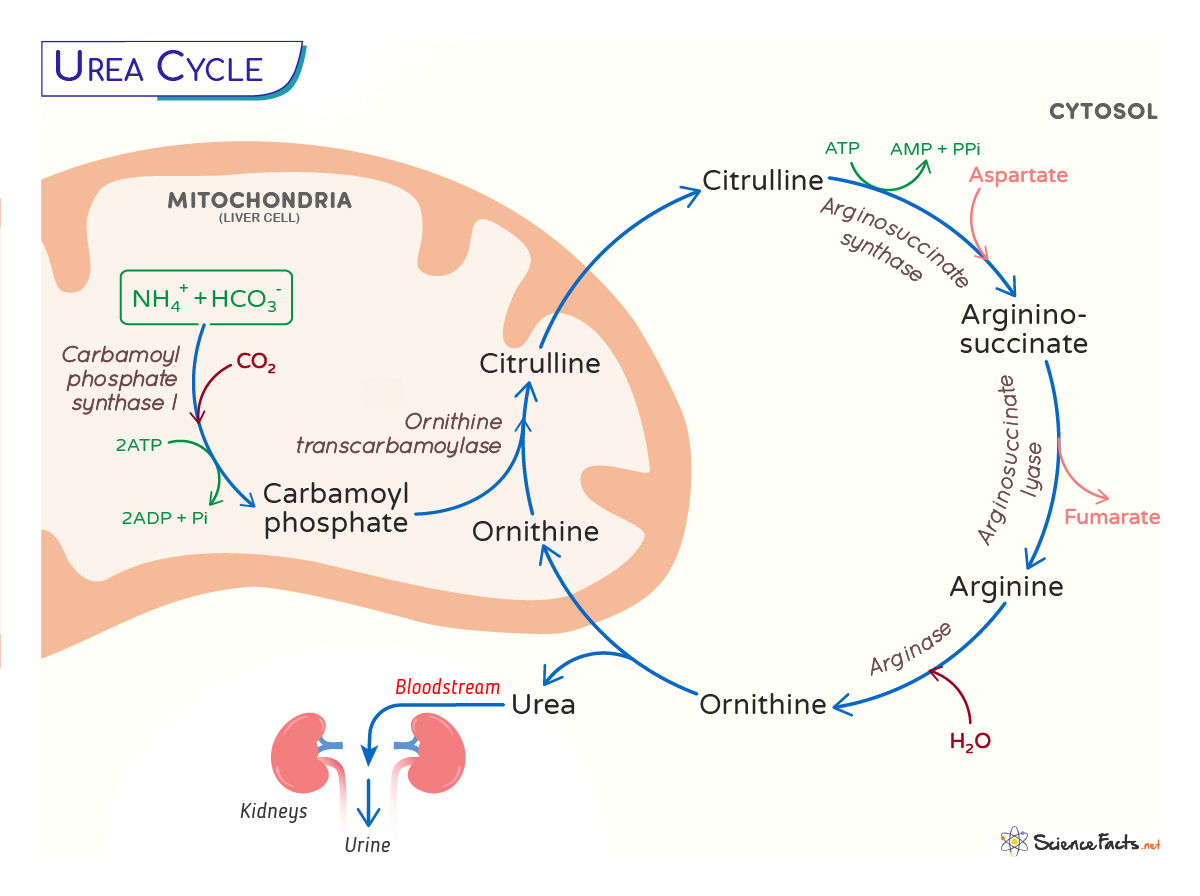
Acid:
Organic Acid Disorders (organic acidemia)
- Multiple pathways -> end products are intermediates of TCA cycle
- “VOMIT” Pathway: Valine, Ornithine, Methionine, Isoleucine, Threonine
- Buildup often leads to emesis!
- Propionic Acidemia / Methylmalonic Acidemia
- Causes organic acidemia AND inhibits 1st step of urea cycle -> hyperammonemia
- Lysine Acidemia -> gluteric acid buildup
-“neuro organic acidemia”- Brain bleeds, basal ganglia strokes
- Tx:
- fuel shunt (give fat / glucose)
- treat acidosis -> bicarb
- carnitine (binds to any carbon chain and makes it water soluble for excretion)
- carbaglu (outcompetes PA/MMA inhibition of urea cycle)