Random Notes
- Med Algorithms
- initial visit - meds, labs (CBC, CMP, TSH/T4, drug panel, B12/Folate, and A1c/lipids if on antipsychotic, Vit D?), therapy, forms
- lookout for CYP interactions
- Info: DSM-5 Criteria – Children’s Mental Health Resource Center
Principles
- Screening tools such as the GAD-7 and PHQ-9 are accurate for initial detection of anxiety and depression, but they are not diagnostic; positive results indicate the need for further assessment to confirm diagnosis and guide management.
- Use a structured clinical interview SCID-5-CV.pdf
- While older adolescents may contribute useful self-report, for most children, direct questioning is insufficient and should not be the sole method of assessment.
- use the Vanderbilt or other questionnaire that evaluates multiple settings from multiple raters
- After a positive screen, the psychiatric intake should focus on:
- Symptom persistence, severity, and functional impairment: Assess how long symptoms have been present, their impact on daily life, and whether they meet criteria for a psychiatric disorder rather than normal stress.
- Differential diagnosis: Distinguish psychiatric symptoms from medical conditions (e.g., cardiac, respiratory, endocrine disorders) and consider physical symptoms that may require further evaluation.
- Comorbid conditions: Evaluate for co-occurring depression, substance use, psychosis, and suicidality, as these can affect treatment decisions and risk.
- Risk factors: Explore sociodemographic and psychosocial factors, trauma history, and other relevant background information.
- Screening for bipolar disorder and psychotic symptoms: In cases of depression, assess for features of bipolar disorder and psychosis, as these require different management.
- Suicidal ideation and risk assessment: Use structured tools such as the Columbia-Suicide Severity Rating Scale for a thorough evaluation of suicide risk.
Disorders
Depression
MDD:
≥5 symptoms during the same two week period that are a change from previous functioning; depressed mood and/or loss of interest/pleasure must be present; exclude symptoms clearly attributable to another medical condition
SIGECAPS
- Sleep: insomnia or hypersomnia
- Interest: reduced, with loss of pleasure
- Guilt: often unrealistic
- Energy: mental and physical fatigue
- Concentration: distractibility, memory disturbance, indecisiveness
- Appetite: decreased or increased
- Psychomotor: retardation or agitation
- **Suicide: thoughts, plans, behaviors.
Anxiety
Over past 6 months (more days than not):
- Restlessness or feeling keyed up or on edge
- Being easily fatigued
- Difficulty concentrating or mind going blank
- Irritability
- Muscle tension
- Sleep disturbance (difficulty falling or staying asleep, or restless unsatisfying sleep)
GAD-7: over past 2 weeks-
- felt nervous or on edge
- unable to stop worrying
- trouble relaxing
- becoming easily annoyed or irritable
- feeling afraid something awful might happen
Panic Attacks
2 or more attacks
Abrupt surge of intense fear or intense discomfort that reaches a peak within minutes and during which time 4 or more of the following symptoms occur:
- Palpitations, pounding heart, or accelerated heart rate
- Sweating
- Trembling or shaking
- Sensations of shortness of breath or smothering
- Feeling of choking
- Chest pain or discomfort
- Nausea or abdominal pain
- Feeling dizzy, unsteady, lightheaded, or faint
- Derealization (feelings of unreality) or depersonalization (being detached from oneself)
- Fear of losing control or “going crazy”
- Fear of dying
- Paresthesias (numbness or tingling sensation)
- Chills or hot flushes.
Panic Disorder
At least one panic attack is followed by one month or more of the person fearing that they will have more attacks, causing them to change their behavior, which often includes avoiding situations that might induce an attack.
Adjustment Disorder
- Develops emotional/behavioral symptoms in response to an identifiable stressor(s) occurring within 3 months of event
- These symptoms or behaviors are clinically significant, as evidenced by one or both of the following:
- Marked distress that is out of proportion to the severity or intensity of the stressor, taking into account the external context and the cultural factors that might influence symptom severity and presentation.
- Significant impairment in social, occupational, or other important areas of functioning.
- Does not meet the criteria for another mental disorder and is not merely an exacerbation of a preexisting mental disorder.
- The symptoms do not represent normal bereavement.
- Once the stressor (or its consequences) has terminated, the symptoms do not persist for more than an additional 6 months.
Bipolar
DSM-5 Criteria for Bipolar Disorder
DIGFAST
- Distractibility: Easily distracted.
- Impulsivity: Excessive involvement in activities with potential for painful consequences, such as impulsive spending or reckless behavior.
- Grandiosity: Inflated self-esteem or a sense of self-importance.
- Flight of ideas: Racing thoughts and rapidly jumping from one idea to another.
- Activity increase: A noticeable increase in goal-directed activity at work, socially, or sexually.
- Sleep deficit: A decreased need for sleep, or not feeling tired after not sleeping for long periods.
- Talkativeness: Being unusually talkative, or feeling pressure to keep talking.
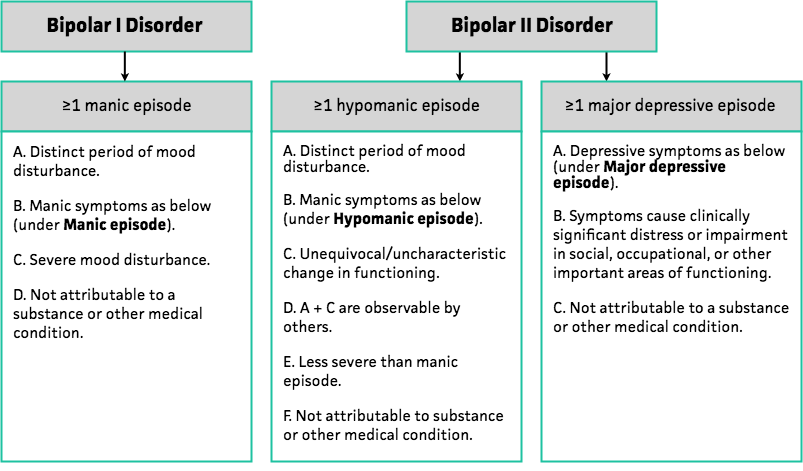
**Hypomanic Episode:
A distinct period of abnormally and persistently elevated, expansive, or irritable mood and abnormally and persistently increased activity or energy
- at least 4 days
- not attributable to substance(s)
PTSD
- Hx of abuse, neglect, major traumas?
- Intrusive thoughts or flashbacks to the event(s)
- Actively avoiding things associated with the event (triggers)
- Anger?
- Nightmares? -> Consider prazosin
Screening-
In past month:
- Had nightmares about the event(s) or thought about the event(s) when you did not want to?
- Tried hard not to think about the event(s) or went out of your way to avoid situations that reminded you of the event(s)?
- Been constantly on guard, watchful, or easily startled?
- Felt numb or detached from people, activities, or your surroundings?
- Felt guilty or unable to stop blaming yourself or others for the event(s) or any problems the event(s) may have caused?
ADHD
-
Do you procrastinate on things that may take a lot of time or effort?
-
Are you a fidgety person? Always doing something with your hands? Is it hard to sit still?
-
Do you find yourself losing things all the time?
-
Do you blurt out answers or cut people off? Do you zone out when other people are talking?
-
Do you prefer to have background noise?
-
Do these things happen in more than 1 setting?
OCD
ODD
A. A pattern of angry/irritable mood, argumentative/defiant behavior, or vindictiveness lasting at least 6 months as evidenced by at least four symptoms of the following categories, and exhibited during interaction with at least one individual who is not a sibling:
Angry/Irritable Mood
- Often loses temper
- Is often touchy or easily annoyed
- Is often angry and resentful
Argumentative/Defiant Behavior - Often argues with authority figures or, for children and adolescents, with adults
- Often actively defies or refuses to comply with requests from authority figures or with rules
- Often deliberately annoys others
- Often blames others for his or her mistakes or misbehavior
Vindictiveness - Has been spiteful or vindictive at least twice within the past 6 months.
Note: The persistence and frequency of these behaviors should be used to distinguish a behavior that is within normal limits from a behavior that is symptomatic. For children younger than 5 years, the behavior should occur on most days for a period of at least 6 months unless otherwise noted (Criterion AB). For individuals 5 years or older, the behavior should occur at least once per week for at least 6 months. Unless otherwise noted (Criterion AB). While these frequency criteria provide guidance on a minimal level of frequency to define symptoms, other factors should also be considered, such as whether the frequency and intensity of the behaviors are outside a range that is normative for the individual’s developmental level, gender, and culture.
Psychosis
Personality Disorders
Personality disorder cluster project