Quick Reference
Go to initial pressors:
- Norepinephrine (titrated to MAP>65)
- Add on vasopressin if >15mcg/min norepinephrine
If cardiogenic shock suspected:
- Dobutamine / Epinephrine
Peri-Intubation Hypotension
- NeoStick
Temporization
- Neostick / Epi Spritzer
Basic Physiology Overview
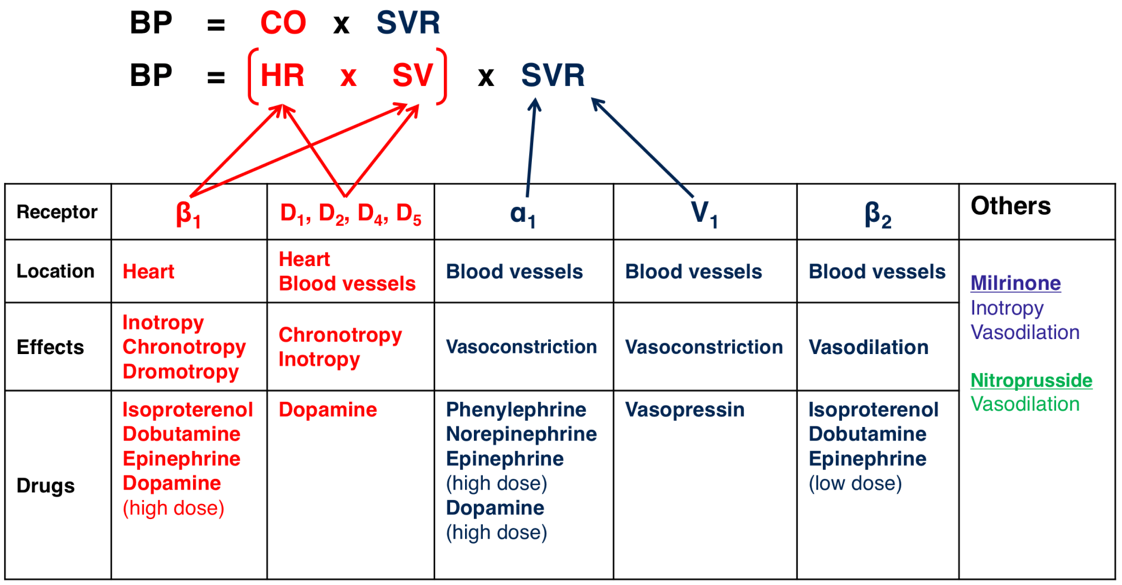
All Vasopressors
| Agent | Target Receptors | Key Hemodynamic Effects | Shock States | How It Augments Derangements |
|---|---|---|---|---|
| Norepinephrine | α1 (+++) β1 (++) β2 (+) | ↑ SVR ↑ BP ↑ CO ↑ HR | Distributive, Cardiogenic | Restores vascular tone and BP in distributive shock; modest inotropy supports CO in cardiogenic shock |
| Epinephrine | β1 (+++), α1 (++), β2 (++) | ↑ SVR ↑ BP ↑↑ CO ↑↑ HR | Distributive, Cardiogenic | Potent inotropy and vasoconstriction; used when refractory to norepinephrine or for severe hypotension. Low doses (≤0.03) → predominant β/inotropy; >0.1 → predominant α1 |
| Phenylephrine | α1 (+++) | ↑ SVR ↑↑ BP ↔/↓ CO ↔/↓ HR | Distributive (rare), Hypovolemic (peri-op) | Pure vasoconstrictor; augments SVR and BP but may decrease CO; used in anesthesia-induced hypotension. Avoid in heart failure. |
| Milrinone | PDE-3 inhibitor | ↓↓ SVR ↓↓ BP ↑↑ CO ↔/↑ HR | Cardiogenic | Inodilator; increases contractility and reduces afterload, improving CO in low-output states |
| Dobutamine | β1 (+++), β2 (++) | ↓/↔ SVR ↓/↔ BP ↑↑ CO ↑ HR | Cardiogenic | Inodilator; increases contractility and CO, reduces afterload; used for hypoperfusion with low CO |
| Dopamine | D1 (+++), β1 (++), α1 (+) | ↑↑ SVR ↑↑ BP ↑ CO ↑↑ HR | Cardiogenic (rare), Distributive (if bradycardic) | Dose-dependent effects; inotropy at low/intermediate doses, vasoconstriction at high doses; arrhythmogenic |
| Vasopressin | V1a, V1b, V2 | ↑↑ SVR ↑↑ BP ↔/↓ CO ↔/↓ HR | Distributive (septic), Refractory shock | Non-adrenergic vasoconstrictor; augments SVR and BP, norepinephrine-sparing in distributive shock |
| Isoproterenol | β1 (+++), β2 (+++) | ↓ SVR ↔ BP ↑ CO ↑↑ HR | Bradycardic shock, AV block | Pure chronotrope/inotrope; increases HR and CO, vasodilates; limited use for severe bradycardia |
Push Dose Pressors
Push-dose pressors for immediate blood pressure control - PMC
Epinephrine
- usual way epinephrine is used is as an infusion at 0.02–0.5 μg/kg/min for hypotension or a bolus 0.01mg/kg (max dose, 1 mg) for bradycardia or cardiac arrest
- Pediatric Code dose epi is also 0.01 mg/kg (i.e. 10mcg/kg)
“Epi Spritzer”
- Mixing instructions: Take a 10 mL syringe filled with 9 mL of normal saline. If premade saline syringes are available, eject 1 mL of saline from the 10 mL saline syringe. Into this syringe, draw up 1 mL of epinephrine from the cardiac epinephrine amp (cardiac amp contains 10 mL of epinephrine concentration 100 mcg/mL or 1:10,000). Shake well. Now you have 10 mL of epinephrine 10 mcg/mL (1:100,000).
- 10mcg/mL in 10mL syringe (100mcg/syringe or .1mg/syringe)
- Dose: 0.5–2 mL (5–20 mcg) every 1–5 minutes.
- Pediatric Cardiac Arrest: (Babies under 10kg) 1mL per kg of 10mcg/mL syringe
Phenylephrine
-
Pure α-agonist; increases BP without increasing HR
-
“quick on/off”; onset: <60s / duration: 10-20min
-
Mixing instructions: Take a 3 mL syringe and draw up 1 mL of phenylephrine from the vial of phenylephrine 10 mg/mL. Inject this into a 100 mL bag of normal saline. Now you have 100 mL of phenylephrine with a concentration of 100 mcg/mL. Draw up some into a syringe; each milliliter in the syringe is 100 mcg.
-
“Neo Stick”: pre-mixed phenylephrine with a concentration of 100 mcg/mL
- Dose: 0.5–2 mL (50–200 mcg) every 1–5 minutes.